Homes in Penrith and the West
Penrith, St Marys, Emu Plains and Mount Druitt were built out mainly from the 1960s to the 1980s with brick-veneer and fibro family homes on generous blocks, many since extended or fitted with granny flats. Glenmore Park, Jordan Springs, Ropes Crossing and the newer estates around Caddens and Orchard Hills are project homes from the late 1990s onward. Penrith's centre is adding apartments. Hot summers and cold winters are harder on exteriors here than near the coast, and much of the area sits on Cumberland Plain clay that moves with the seasons, so cracking in older brick homes is a familiar sight.
Councils and approvals
Penrith City Council covers Penrith, St Marys, Emu Plains, Glenmore Park and Jordan Springs, while Mount Druitt and the suburbs east of Ropes Creek sit with Blacktown City Council. Hawkesbury City Council takes over further north. The Hawkesbury-Nepean Valley has some of the highest flood exposure in Australia, and Penrith Council manages extensive flood controls near the Nepean River, South Creek and the local creeks, with Emu Plains and Penrith's low-lying areas mapped in detail. Bushland edges toward the Blue Mountains and Orchard Hills can be bushfire-prone. Your Section 10.7 certificate lists what applies.
Jobs Penrith homeowners ask for most
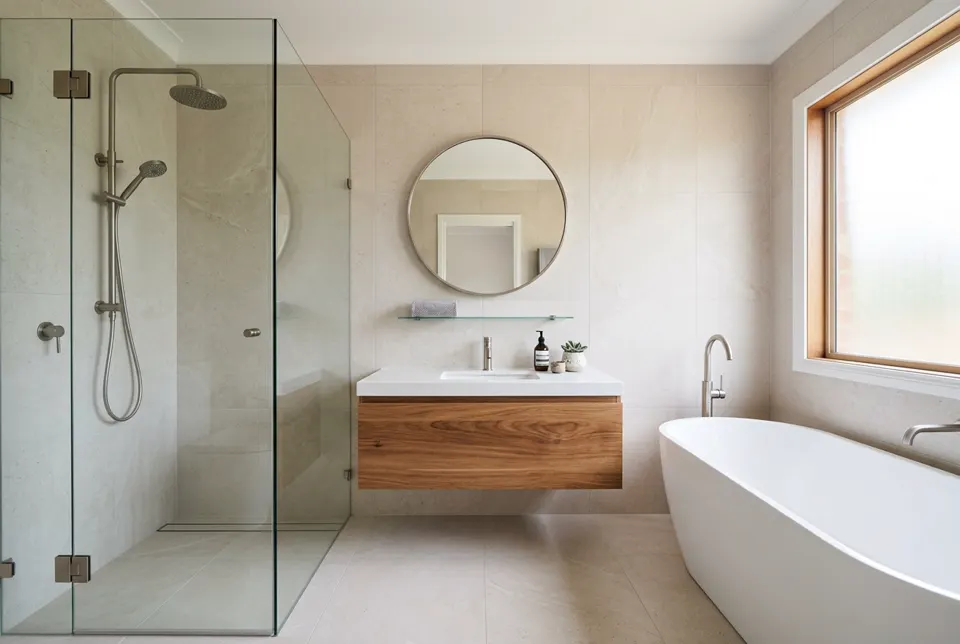
Bathroom renovations are the most common job, often replacing the original bathroom in a 1970s or 80s home. Kitchen renovations, roof restoration and timber floor installation follow. Home extensions and granny flats suit the larger blocks in St Marys and Emu Plains. Concrete driveways, fence installation, carport builders and pergola builders are steady requests, and retaining walls help on the sloping ground around Glenmore Park and Emu Heights. Clay movement brings questions about underpinning, and gutter replacement is common after summer storms.
Councils and suburbs
Councils: Penrith City Council, Blacktown City Council, Hawkesbury City Council.
Suburbs include: Penrith, St Marys, Emu Plains, Glenmore Park, Mount Druitt and surrounds. If your postcode is nearby, we’ll still look for crew members who cover it.
Common questions
Is my Emu Plains or Penrith home flood-prone?
Much of the land near the Nepean River, South Creek and the local creeks is mapped as flood-affected, and Penrith City Council has completed detailed flood studies for Emu Plains, Emu Heights and Leonay. A Section 10.7 certificate from council lists the flood constraints for your address. They can change floor levels and what you can build, so check before planning an extension or granny flat.
Why does my brick home have cracks?
Much of the outer west sits on reactive clay that swells after rain and shrinks in dry spells. That movement shows up as cracks in brickwork, sticking doors and gaps at cornices, especially in older homes or where drainage has changed. Cracks don't automatically mean underpinning. Ask for a qualified structural assessment first, then decide on the right repair.
Do I need council approval for a granny flat in Penrith?
Many blocks can have a secondary dwelling approved as complying development if the lot is large enough and the design meets NSW standards. Flood-affected land, bushfire-prone land and easements can change that. The NSW Planning Portal and Penrith or Blacktown councils can confirm what's possible for your block.
What should I think about for a pergola or deck in the heat?
Western Sydney summers are hot, so shade and ventilation matter more than near the coast. Think about orientation, roofing that blocks heat, and timber or composite that copes with strong sun. Pergola builders and deck builders who work locally will have views on what lasts. Check whether your design is exempt development or needs approval.