In NSW there is no single rule: responsibility for a retaining wall depends on who built it, why, and whether it supports a dividing fence. Legal Aid NSW says the Dividing Fences Act does not cover retaining walls unless the wall is needed to support or maintain the dividing fence, that neighbours have a duty not to remove the support to adjoining land, and that most retaining wall disputes are heard in the Supreme Court of NSW. Get an independent engineer's report and legal advice before you act.
- Legal Aid NSW: a dividing fence does not include a retaining wall, unless the wall is needed to support and maintain the fence.
- Neighbours have a duty of care not to remove the support to adjoining land, for example by excavating.
- NCAT will not hear retaining wall matters unless there is evidence the wall is necessary for a dividing fence, according to Legal Aid NSW.
- Since 1 July 2025, Community Justice Centres only mediate disputes referred by NSW courts, so most neighbours use private mediation first.
- In NSW, a retaining wall up to 600mm high and at least 1 metre from boundaries can usually be built without approval; taller walls need a CDC or DA.
Who is responsible for a retaining wall in NSW?
It depends on the facts. No NSW law says the uphill owner or the downhill owner always pays. Responsibility usually turns on why the wall was built, who built it, what it supports, and what your title shows.
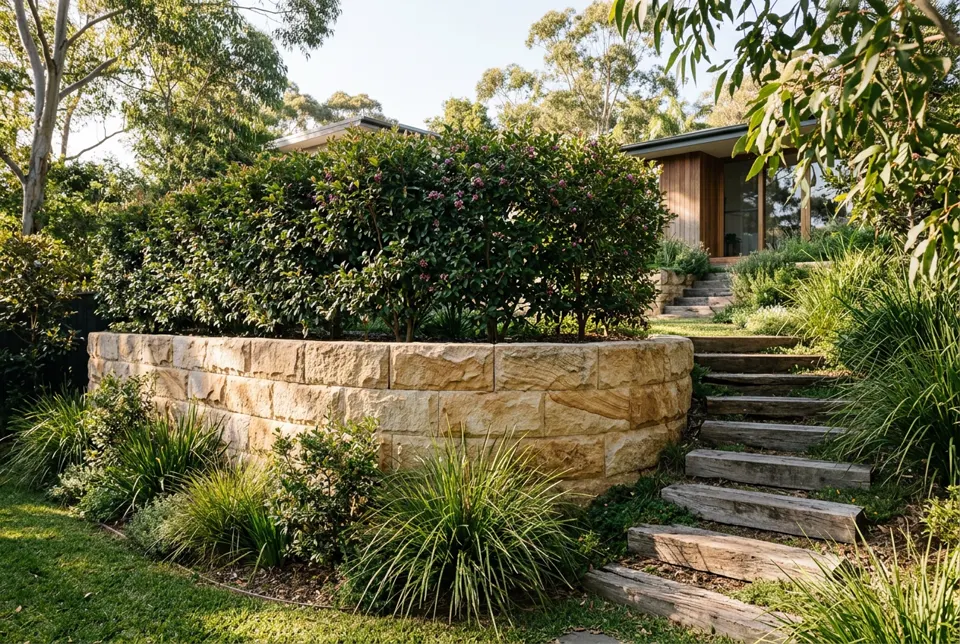
A retaining wall is a structure that supports or holds back earth. Legal Aid NSW explains that walls between neighbours are often found where ground levels differ, where the wall supports the higher property, keeps its surface level and stops land moving between the two properties.
This guide is general information, not legal advice. Retaining wall disputes can be complex and expensive, and Legal Aid NSW recommends getting legal advice before starting a claim.
Is a retaining wall a dividing fence?
Usually not. Legal Aid NSW says a dividing fence is a structure that separates neighbouring properties, and it does not include a retaining wall unless the wall is needed to support and maintain the fence.
This matters because the Dividing Fences Act 1991 sets up the cost-sharing system for fences. Legal Aid NSW says the cost of building, repairing or maintaining a retaining wall is not covered by that Act unless the wall supports or maintains the dividing fence.
If the wall does hold up the fence, you may be able to ask your neighbour to contribute. Legal Aid NSW suggests getting an independent structural engineer's report as evidence that the wall is needed to support the fence.
Is the uphill or downhill neighbour responsible?
Neither, automatically. Ask what happened to the ground levels and why. These questions usually matter most:
| Situation | Questions that usually matter | Evidence to gather |
|---|---|---|
| One neighbour dug out (cut) their land | Did the digging remove support from the land next door? | Photos, plans, approvals for the excavation, dates |
| One neighbour built up (filled) their land | Is the wall holding back fill added by one owner? | Survey levels, old photos, council records |
| The wall holds up the dividing fence | Is the wall needed to support and maintain the fence? | Independent structural engineer's report |
| The wall is old and nobody knows who built it | Which side does it sit on, and which land does it support? | Survey, title search, section 10.7 certificate |
| The wall is failing and damaging property | What is causing the failure: drainage, roots, loads or age? | Engineer's report, photos over time |
Based on Legal Aid NSW guidance on retaining walls. The outcome depends on your facts. Get legal advice for your situation.
A common starting point in practice is to ask who changed the natural ground level, and whose land the wall supports. That is a question to explore with a lawyer, not a fixed rule.
What is the duty of support?
Each owner must not remove the support their land gives to the land next door. Legal Aid NSW says you and your neighbour have a duty of care not to do anything that removes the support to adjoining land.
For example, Legal Aid NSW says you could be liable for negligence if excavation on your land damages your neighbour's land. This is one reason to get engineering advice before digging near a boundary, even for a pool, slab or garden bed.
Do you need council approval for a retaining wall in NSW?
Low walls often do not. Under the NSW Codes SEPP, a retaining wall can be exempt development if it is no more than 600mm high, any cut or fill is no more than 600mm, it is at least 1 metre from each boundary, and it meets the other standards. Legal Aid NSW adds that exempt walls must also keep 1 metre from easements and sewer or water mains.
That 1 metre boundary setback means most walls right on the boundary are not exempt, even if they are low. Walls that do not meet every exempt standard need a complying development certificate (CDC) or a development application (DA).
Legal Aid NSW says that if council tells you approval is needed, you should not build until you have it. For prices and the full exempt checklist, see our guide Retaining Wall Cost Sydney.
When does a retaining wall need an engineer?
Walls that need approval usually need an engineer's design. Ask for one for any wall that supports a driveway, house, pool, fence or steep slope, even if it is low.
A geotechnical engineer may need to test the soil. Sydney has reactive clay soils in many western suburbs and sandstone in many eastern and northern areas, and both affect footing design.
In a dispute, an independent engineer's report is often the most useful document you can have. It can say what the wall supports, why it is failing and what a fix should involve.
What should you do if a neighbour's retaining wall is failing?
If a retaining wall is leaning, bulging, cracking or moving after rain, keep people, children and cars away from it. Do not dig near its base. If there is an immediate risk of collapse, call the NSW SES on 132 500 for storm and flood damage, or 000 in an emergency.
Then work through these steps:
- Take dated photos and measurements of the wall, cracks and any lean, and keep adding to them.
- Talk to your neighbour early, calmly and in writing if you can. Share what you have seen.
- Get an independent structural engineer's report on the cause and the fix.
- Check council records, approvals and a survey to see who built the wall and where it sits.
- Get legal advice before you spend money on repairs you expect your neighbour to share.
- Try mediation before going to a court or tribunal.
How are retaining wall disputes resolved in NSW?
Most start with a conversation and, if that fails, mediation. Since 1 July 2025, Community Justice Centres only provide mediation for disputes referred by NSW courts, according to NSW Communities and Justice. For most neighbours, that means using a private mediator first.
- NCAT: the NSW Civil and Administrative Tribunal can make orders about dividing fences, including how costs are shared. You must serve a Fencing Notice at least one month before applying. Legal Aid NSW says NCAT will not hear retaining wall matters unless there is evidence the wall is necessary for a dividing fence.
- Supreme Court: Legal Aid NSW says most disputes about retaining walls are heard in the Supreme Court of NSW. These cases can be slow and costly.
- Help: LawAccess NSW and Legal Aid NSW offer free information and guided pathways for neighbour and fence disputes.
Building a new wall on or near the boundary
Plan it with your neighbour, not around them. Before work starts:
- get a survey so you know exactly where the boundary is;
- confirm whether the wall is exempt or needs a CDC or DA;
- get an engineer's design for any wall that needs approval or supports loads;
- agree in writing who pays for what, where water will drain, and how the fence will be replaced; and
- use a licensed contractor. Work over $5,000 including GST needs a contractor licence and a written contract, the deposit is capped at 10%, and work over $20,000 needs Home Building Compensation cover. Check the licence on Verify NSW.
Get a retaining wall assessed and quoted
Describe your retaining wall job to MyTradeCrew. Tell us the length, height, what the wall holds back and whether it is on a boundary. We will send it to up to three vetted, licensed and insured local trades from our crew, who can inspect the wall and give you a written quote. For legal questions about who pays, speak to a lawyer.
Frequently asked questions
Who pays for a retaining wall between neighbours in NSW?
It depends on the facts. The Dividing Fences Act cost-sharing rules do not cover retaining walls unless the wall is needed to support or maintain the dividing fence, according to Legal Aid NSW. Otherwise, who pays often depends on who built the wall, why, and what it supports. Get an engineer's report and legal advice.
Can NCAT deal with a retaining wall dispute?
Only in limited cases. Legal Aid NSW says NCAT will not hear matters about retaining walls unless there is supporting evidence that the wall is necessary for a dividing fence. Most retaining wall disputes are heard in the Supreme Court of NSW, so legal advice is important.
Can I build a retaining wall on the boundary in NSW?
Not as exempt development. An exempt wall must be at least 1 metre from each boundary and no more than 600mm high. A boundary wall needs a CDC or DA, and it is wise to agree the design, cost and drainage with your neighbour in writing before work starts.
What height retaining wall needs council approval in NSW?
Walls over 600mm high, or with cut or fill over 600mm, need approval. Lower walls also need approval if they are within 1 metre of a boundary or fail any other exempt standard, such as distance from other retaining walls or effects on water flow.
What if my neighbour's excavation damaged my land?
Legal Aid NSW says neighbours have a duty of care not to remove support from adjoining land, and that excavation which damages a neighbour's land could lead to a negligence claim. Record the damage, get an engineer's report and seek legal advice promptly.
Ready to get quotes?
Compare up to 3 licensed, insured retaining wall construction trades near you. Free.