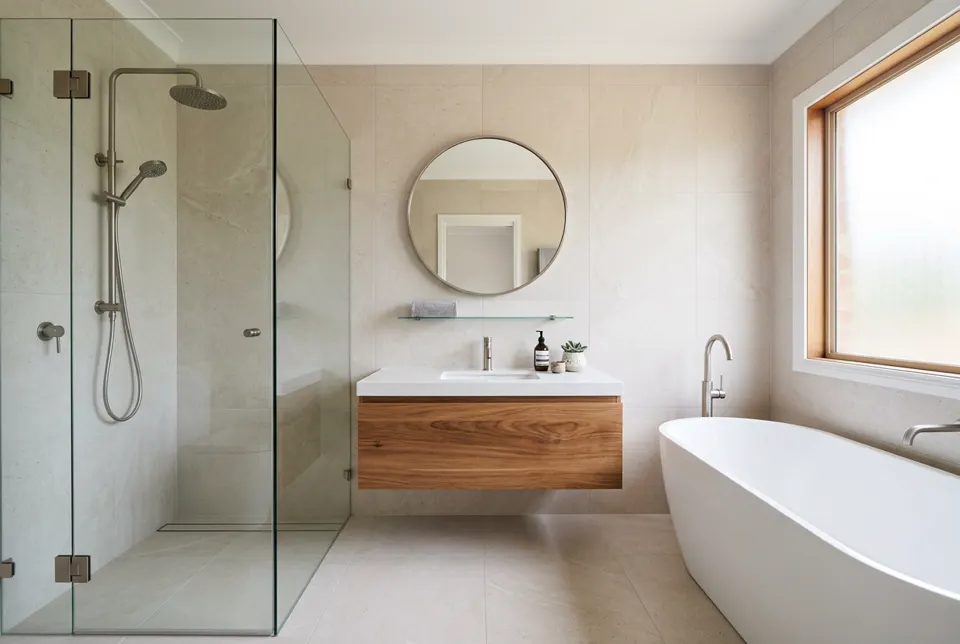
As of October 2026, a standard full bathroom renovation takes about 3 to 5 weeks of on-site work, a cosmetic refresh about 2 to 3 weeks, and a job that moves walls or plumbing 6 to 8 weeks, according to What’s The Damage. Counting design, ordering and approvals, the whole project usually takes 2 to 3 months from decision to first shower. Waterproofing cure times and fixture lead times are the stages most often underestimated.
- A standard bathroom renovation takes about 3 to 5 weeks on site; a cosmetic refresh about 2 to 3 weeks (What’s The Damage, October 2026).
- The ten on-site stages add up to roughly 16 to 25 working days, but they rarely run back to back.
- Planning, selections, quotes and ordering usually take 2 to 6 weeks before demolition starts.
- Membranes need their data-sheet drying time before tiling: from about 3 to 4 hours for rapid products to 24 hours for some standard ones.
- In a NSW apartment, a bathroom renovation needs owners corporation approval by special resolution, which can add weeks.
How long does a bathroom renovation take?
A standard full bathroom renovation takes about 3 to 5 weeks of on-site work, according to What’s The Damage’s timeline guide (updated October 2026). The length depends mostly on scope:
- Cosmetic refresh, same layout: about 2 to 3 weeks on site.
- Standard full renovation: about 3 to 5 weeks on site.
- Major renovation with walls moved, plumbing relocated or custom joinery: often 6 to 8 weeks.
- Door to door, including design and ordering: about 2 to 3 months.
A small bathroom of about 3 to 4 m² is not much faster. What’s The Damage estimates 2 to 3 weeks on site for a standard small Sydney bathroom, because each trade still needs its own visit and the membrane still needs to dry.
Bathroom renovation timeline, stage by stage
Each stage has to finish before the next trade can start. This is the typical order for a full renovation.
| Stage | Typical time | What happens |
|---|---|---|
| 1. Demolition and strip-out | 1 to 2 days | Old tiles, fixtures and sheeting removed; waste taken away |
| 2. Plumbing and electrical rough-in | 2 to 3 days | Licensed plumber and electrician run pipes and wiring to new positions |
| 3. Wall sheeting and preparation | 1 to 2 days | Wet-area board fixed and surfaces readied |
| 4. Waterproofing | 2 to 3 days | Primer, junction treatment and membrane coats, with drying time between coats |
| 5. Screeding and floor preparation | 1 to 2 days | Floor bed laid to fall towards the waste |
| 6. Tiling | 4 to 7 days | Floor and wall tiles laid |
| 7. Grouting and silicone | 1 to 2 days | Joints grouted and corners sealed |
| 8. Fit-off | 2 to 3 days | Vanity, toilet, tapware, lights and fan connected |
| 9. Shower screen and accessories | 1 to 2 days on site | Measured after tiling, then installed |
| 10. Painting and final finish | 1 to 2 days | Ceiling and walls painted, final clean |
Source: What’s The Damage, bathroom renovation timeline (updated October 2026). These add up to roughly 16 to 25 working days but rarely run back to back.
Gaps between stages are normal. Membranes, screeds, adhesives and grout all need set time, and made-to-measure items such as screens and stone tops can leave a one to two week pause between tiling and final installation.
How long does waterproofing take to cure before tiling?
It depends on the membrane. Manufacturer data sheets give very different wait times, all measured at about 22 to 23°C and 50 per cent humidity:
- ARDEX WPM 155 Rapid Plus (data sheet issued January 2025): tiling can start 3 to 4 hours after the final coat.
- Davco K10 Plus (Sika data sheet, June 2026): ready for tiling in 6 to 8 hours; flood testing after 3 days.
- Bostik Dampfix Gold (product page, April 2024 TDS): 2 hours per coat and 24 hours before the following trade.
Cold or humid weather slows drying, so Sydney winter jobs can take longer. Our guide How Long Does Waterproofing Take to Dry Before Tiling? compares more products and explains coats and flood testing.
What happens before work starts?
Planning usually takes longer than people expect. What’s The Damage puts preparation before demolition at 2 to 6 weeks, covering design, selections, quotes, the contract and ordering.
- Custom vanities commonly take 4 to 8 weeks to make, so order them early.
- Imported tiles and tapware can have long lead times. Confirm stock before demolition.
- Get written quotes and sign a contract. NSW requires a written contract for work over $5,000 including GST, and contracts over $20,000 have a five business day cooling-off period.
- Book a licence check on Verify NSW for every trade before you pay a deposit.
Do I need council or strata approval for a bathroom renovation?
In a house, a like-for-like bathroom renovation rarely needs council approval, according to What’s The Damage. Layout changes, structural work and heritage-listed homes can change that. The NSW Planning Portal says some internal alterations can be done as complying development, which means a certifier approves them against set standards. Check with your council or a certifier if walls or structure will change.
In an apartment, yes. NSW strata rules class a bathroom renovation, and any change that requires waterproofing, as a major renovation. It needs a special resolution of the owners corporation at a general meeting, and passes if no more than 25 per cent of the value of the votes cast are against it. If the work changes the structure of the property, you must also give 14 days’ written notice before work starts.
Because approval needs a meeting and a vote, What’s The Damage warns that approval clocks run in weeks, not days. Start the strata process before you book trades.
What causes bathroom renovation delays?
Most delays come from surprises behind the tiles, late decisions and long lead times. What’s The Damage lists these as the common reasons a job runs past six weeks:
- Layout changes that mean re-running drainage and water supply.
- Structural work, such as moving walls, which may need an engineer’s sign-off.
- Discoveries during strip-out: water-damaged framing, non-compliant plumbing, or asbestos in homes built before 1990.
- Custom joinery and imported products ordered after demolition.
- Approvals for layout, structural or apartment work.
- Gaps between trades.
If your home was built before 1990, have suspect sheeting, tiles or adhesive tested for asbestos before demolition. Finding it mid-job stops work until it is safely removed by a licensed removalist, which can add days or weeks.
How long will you be without a bathroom?
Plan to be without the room for the whole on-site period, from demolition to fit-off. For a standard renovation that is usually 3 to 5 weeks, and the shower should not be used until the membrane, adhesive and grout have reached the cure times on their data sheets.
If it is your only bathroom, ask your builder early about options. Some can stage the work or temporarily reconnect a toilet, but this depends on the layout and the plumber. Others suit a short stay elsewhere or a hired portable bathroom.
How long does each type of bathroom job take?
Not every bathroom job is a full renovation. These are typical on-site times for common jobs, drawn from What’s The Damage’s timeline and Sydney guides (October 2026).
| Job | Typical time on site | What sets the pace |
|---|---|---|
| Cosmetic refresh (vanity, tapware, paint) | About 2 to 3 weeks | Fixture delivery and trade availability |
| Small bathroom full renovation (3 to 4 m²) | About 2 to 3 weeks | Waterproofing and screed drying; one visit per trade |
| Standard full renovation | About 3 to 5 weeks | Ten stages in sequence, with cure times between them |
| Major renovation (walls or plumbing moved, custom joinery) | About 6 to 8 weeks | Structural work, approvals and joinery lead times |
| Whole project, decision to first shower | About 2 to 3 months | Design, selections, quotes, approvals and ordering |
Sources: What’s The Damage bathroom renovation timeline and small bathroom Sydney guides (updated October 2026). Indicative only.
Time of year matters too. Membranes dry more slowly in cold, damp weather, and many trades and suppliers close for a break over Christmas and New Year. If you want the bathroom finished before a set date, start planning early and build in a buffer.
How do you keep a bathroom renovation on schedule?
- Finalise every selection, from tiles to towel rails, before demolition.
- Order long-lead items such as custom vanities and imported tapware early, and confirm delivery dates.
- In an apartment, get strata approval in writing before booking trades.
- Ask your builder for a written week-by-week schedule that includes cure times and inspections.
- Agree how variations will be priced and approved, so hidden problems do not stall the job.
- Be available to make quick decisions when trades ask questions.
Get a bathroom renovation scheduled
Describe your bathroom and your timing to MyTradeCrew. We’ll send it to up to three vetted, licensed and insured local trades from our crew, who can talk through a realistic schedule, quote and contract with you directly. It is free for homeowners.
Frequently asked questions
How long does it take to tile a bathroom?
What’s The Damage (October 2026) puts tiling at about 4 to 7 days for a standard full bathroom, plus 1 to 2 days for grouting and silicone. Large-format tiles, patterns, niches and feature walls take longer. Tiling can only start once the membrane has dried for the time on its data sheet, and the screed has set.
Can I use the shower straight after the renovation?
Not always. Membranes, tile adhesives and grout all need time to cure. For example, Sika’s Davco K10 Plus data sheet gives 5 days to return to service, and ARDEX says showers on WPM 155 Rapid Plus should not be used until full cure, 72 hours after the final coat. Ask your tradie when the shower is safe to use.
How long does bathroom demolition take?
Demolition and strip-out usually take about 1 to 2 days, according to What’s The Damage. It can take longer in an apartment with lift bookings and restricted hours, or if asbestos testing or removal is needed. Hidden water damage found at this stage can also add repair time before the next trade starts.
Why do tradies leave gaps between stages?
Many materials need set time before the next trade can work on them. Membranes need drying time between coats and before tiling, screeds and adhesives must set, and made-to-measure screens and stone tops are measured after tiling. What’s The Damage notes this can leave a one to two week pause before final installation.
Do I need to move out during a bathroom renovation?
Usually not, unless it is your only bathroom and no temporary toilet or shower can be arranged. Expect noise and dust during demolition and tiling, and plan where you will shower for 3 to 5 weeks. Ask your builder how they will protect floors and keep dust out of the rest of the home.
Ready to get quotes?
Compare up to 3 licensed, insured bathroom renovations trades near you. Free.