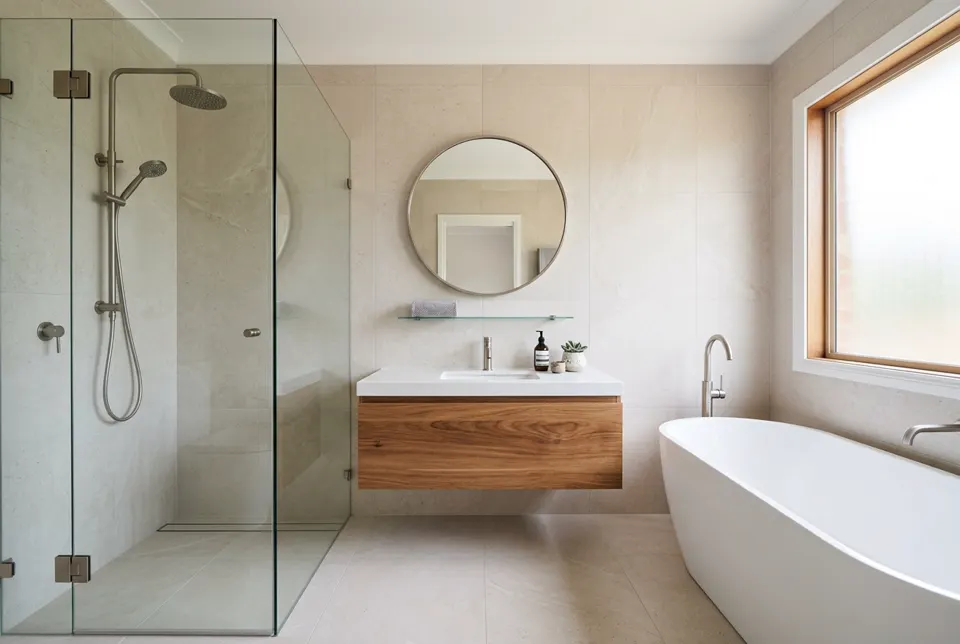
How Hills District homes shape a bathroom renovation
The classic Hills home is a single or two-storey brick-veneer house built between about 1975 and 1995 in Castle Hill, Baulkham Hills, West Pennant Hills or Kellyville. It usually has a main bathroom with a separate toilet, a small ensuite off the main bedroom, and a bath that nobody has used in years. Tiles, vanities and tapware are original or were replaced once in the early 2000s. Most of these bathrooms are a sensible size, which gives you more layout freedom than inner-city homes.
The big request here is opening up the ensuite: taking the wall between a cramped ensuite and a walk-in robe, or borrowing space from a bedroom to create a proper two-person bathroom. Combining the separate toilet into the main bathroom is another common move, often with a second toilet added elsewhere.
Newer project homes in Rouse Hill, Kellyville Ridge and The Ponds are reaching the 15 to 25 year mark where shower screens, grout and membranes start to fail, and owners want to replace builder-grade finishes. Semi-rural homes in Dural and Glenhaven often have a third bathroom or a pool-side bathroom in the plan.
Council and approvals in the Hills
The Hills Shire Council covers most of the region, with Dural shared with Hornsby Shire Council, Rouse Hill crossing into Blacktown City Council, and North Rocks and Carlingford under the City of Parramatta. For a bathroom renovation inside an existing house, none of them require a development application, as long as you don't change the structure or the outside of the house. Plumbing, electrical and waterproofing work must be done by licensed trades, and work over the NSW threshold needs a licensed contractor and, above a higher threshold, home building compensation insurance.
Approval becomes relevant if the new bathroom is part of an extension or first-floor addition. Many of those can go through as complying development in the Hills, but bushfire-prone land on the Dural, Glenhaven and Kenthurst edges adds requirements. Removing a load-bearing wall between an ensuite and a bedroom isn't a planning matter, but it does need a builder or engineer to confirm the structure. The NSW Planning Portal and the council's planning team can confirm the pathway for anything beyond a straight renovation.
Typical scope choices in Hills homes
- Most Hills bathrooms are rebuilt rather than refreshed. Strip-out, new membrane, new plumbing fittings and a modern layout is the usual scope.
- Enlarge the ensuite by taking space from the walk-in robe or bedroom. Rebuilding the robe with better joinery often makes up for the lost space.
- Swap the bath in the ensuite for a large walk-in shower, and keep one bath in the main bathroom for kids and resale.
- Clay soils in the Hills move with the seasons. If you've seen cracks in tiles or walls, have the slab and walls checked before new tiles go in.
- Upgrade ventilation. Many 1980s bathrooms have a fan that vents into the roof space, which breeds mould. Duct it outside.
- Think ahead: a level-entry shower and a stronger wall for a future grab rail cost little now and help if you plan to stay long term.
What to tell the crew when you ask for quotes
Describe the house and its approximate age, which bathroom you're renovating, and whether you want to change the layout or knock through to a robe or bedroom. List what stays and what moves. Mention any cracking, leaks or mould, and say whether there is a second bathroom to use during the work. Note access and parking, which is usually easy in the Hills but worth stating, and whether you'd like the trades to suggest fixtures or you'll choose your own.
We don't publish regional prices because scope drives cost more than location. Our Sydney guide at /guides/bathroom-renovation-cost-sydney/ explains what moves the price so you can compare quotes with confidence. When you're ready, describe the job to MyTradeCrew and we'll send it to up to three vetted local trades who quote you directly.
Common questions
Do I need council approval to renovate a bathroom in Castle Hill?
Not for a renovation inside the existing house that keeps the structure and exterior unchanged. The Hills Shire Council treats that as internal work. If the bathroom is part of an extension or a first-floor addition, that project needs either complying development certification or a development application. Licensed trades are still required for plumbing, electrical and waterproofing.
Can I knock out the wall between my ensuite and walk-in robe?
Often, yes, and it's one of the most common Hills renovations. The wall needs checking first: in a two-storey home it might carry load from above. A builder or engineer can confirm. If it isn't load-bearing, removing it is straightforward and gives you a much more usable ensuite. If it is, a beam can usually be installed.
Why are my bathroom tiles cracking?
In the Hills the usual cause is movement in the clay soil under the slab, especially after very wet or very dry periods. Cracks along a straight line often follow a crack in the slab or a wall. Have the structure assessed before retiling, or the new tiles may crack the same way. Good drainage around the house helps keep movement down.
Should I renovate before I sell?
That depends on the house and the market, and a local agent is the right person to ask. In general, a dated 1980s bathroom turns some buyers off, and a clean, modern bathroom helps a home show well. If you do renovate to sell, keep the scope sensible and the finishes neutral rather than going top of the range.
More on bathroom renovations
Scope checklists, price drivers and quote comparisons are on the main Bathroom renovations in Sydney page. For costs, read Bathroom Renovation Cost Sydney: 2026 Price Guide.